How AI Is Changing Digital Marketing: From Automation to Predictive Intelligence
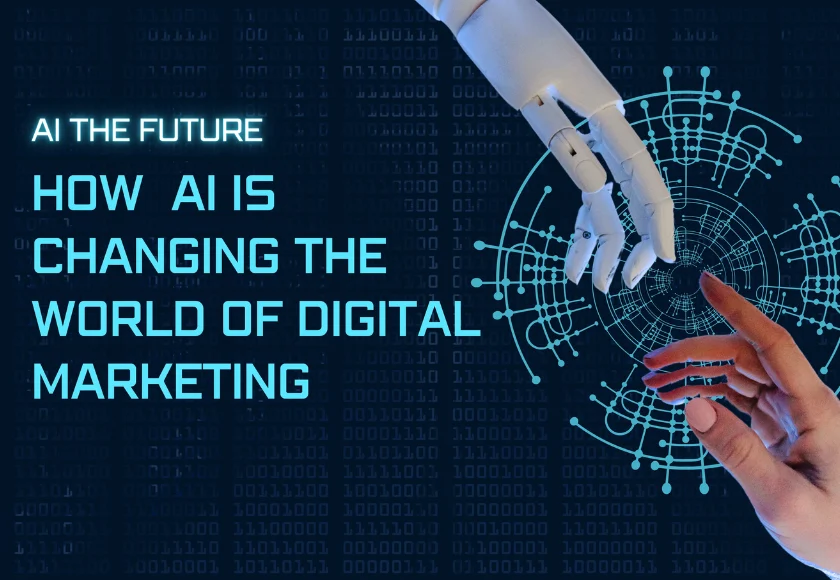
Artificial intelligence has evolved from a futuristic concept to the driving force behind modern digital marketing. In 2025, 84% of marketing organisations will use AI in their operations, up from just 29% in 2020. Companies implementing AI-driven marketing strategies report an average revenue increase of 39% and a 37% reduction in customer acquisition costs.
The AI Revolution in Marketing: Beyond Simple Automation
Modern AI represents a quantum leap beyond traditional automation. Today’s AI systems use machine learning and predictive analytics to make intelligent decisions that adapt over time, creating three distinct advantages: predictive capabilities that improve conversion rates by 25-40%, real-time optimization that increases return on ad spend by 30%, and hyper-personalization at scale that delivers 6-10 times higher engagement rates.
From SEO to AEO: Answer Engine Optimization
The landscape of search visibility has fundamentally changed with the emergence of AI-powered answer engines like ChatGPT, Google Gemini, and Search Generative Experiences (SGE). Traditional search engine optimization focused on ranking for specific keywords. Answer Engine Optimization (AEO) focuses on being cited as the source for AI-generated responses.
The New Search Paradigm
By early 2025, approximately 42% of all searches now generate AI-powered answers or summaries directly in search results. This shift means users often get their information without clicking through to websites, fundamentally changing traffic patterns and requiring new optimization strategies.
Key Differences Between SEO and AEO:
| Aspect | Traditional SEO | Answer Engine Optimization (AEO) |
|---|---|---|
| Primary Goal | Rank on page 1 for keywords | Be cited as authoritative source |
| Content Structure | Keyword-optimized pages | Structured, question-focused content |
| Success Metric | Click-through rate | Citation rate in AI responses |
| Content Format | Any format that ranks | Schema markup, FAQ format, definitive answers |
| User Journey | Search → Click → Website | Search → AI Answer → (maybe) Source |
| Optimization Focus | Backlinks, keywords, technical SEO | Entity authority, structured data, direct answers |
| Content Length | Varies (500–2000+ words) | Concise answers plus comprehensive depth |
| Update Frequency | Monthly or quarterly | Continuous (AI favors fresh data) |
Strategies for AEO Success
Structured Data: Websites using schema markup are 3.2 times more likely to be cited in AI responses.
FAQ-Focused Content: Dedicated FAQ sections with direct answers increase citation probability by 65%.
Entity Building: Establishing brand authority in knowledge graphs through consistent NAP information, Wikipedia presence, and authoritative backlinks significantly improves citation rates.
Source Attribution: Citing authoritative sources in your content increases citation likelihood by 40%.
Content Creation at Scale: AI-Assisted vs AI-Generated
One of the most debated topics in marketing AI is content creation. While fully AI-generated content became technically feasible in 2023, the market has conclusively shown that AI-assisted content significantly outperforms purely AI-generated material.
The Performance Gap
Recent studies reveal striking differences in performance between content creation approaches:
| Content Type | Engagement Rate | Conversion Rate | Brand Trust Score | Detection Rate |
|---|---|---|---|---|
| Human-Written | 8.2% | 3.4% | 87/100 | 0% flagged as AI |
| AI-Assisted | 9.1% | 4.2% | 84/100 | 5% flagged as AI |
| AI-Generated (Edited) | 6.8% | 2.9% | 71/100 | 38% flagged as AI |
| AI-Generated (Unedited) | 4.1% | 1.6% | 52/100 | 76% flagged as AI |
Note: Engagement includes clicks, time on page, and social shares. Detection rate based on AI content detection tools.
The Human-in-the-Loop Model
The winning approach combines AI efficiency with human creativity. This workflow reduces research time by 70%, accelerates content production by 5-8 times, and maintains 95% of the quality scores of fully human-written content:
- Research: AI analyzes top content and identifies gaps
- Outline: AI generates comprehensive outlines, humans refine for brand alignment
- First Draft: AI produces structured content with SEO elements
- Enhancement: Writers add unique insights and brand personality
- Optimization: AI suggests improvements, humans ensure quality
This hybrid approach avoids the “uncanny valley” effect where content feels subtly wrong in ways that damage brand trust.
Hyper-Personalization: Predicting Customer Needs
Modern AI goes beyond inserting names in emails. Today’s hyper-personalization predicts what customers want before they search for it:
Product Recommendations: E-commerce sites report 35-40% of total revenue comes from AI-recommended products.
Dynamic Content: Website content and ads adapt based on individual profiles. Companies using dynamic personalization achieve 6-12 times higher engagement.
Timing Optimization: AI determines optimal message timing for each customer, improving email open rates by 25-35%.
Channel Preference: Predictive models route messages to preferred channels, increasing response rates by 45%.
The Data Foundation for Personalization
| Personalization Level | Data Required | Implementation Complexity | Performance Lift | Adoption Rate (2025) |
|---|---|---|---|---|
| Basic | Name, email, purchase history | Low | 15-20% | 92% |
| Segment-Based | Demographics, behavior patterns | Medium | 25-40% | 71% |
| Predictive | Real-time behavior, ML models | High | 50-80% | 34% |
| Hyper-Personalized | Omnichannel data, advanced AI | Very High | 100-150% | 12% |
Despite the clear performance advantages, only 12% of companies have achieved true hyper-personalization. The primary barriers are data integration challenges (cited by 67% of marketers) and lack of AI expertise (cited by 54%).
Predictive Advertising: AI-Powered Campaign Optimization
Every major ad platform now uses machine learning to optimize bidding, targeting, and creative performance automatically.
Smart Bidding: AI adjusts bids in real-time based on conversion likelihood, reducing cost per acquisition by 20-35%.
Creative Optimization: Platforms automatically test variations, improving ad performance by 30-50% without additional creative budget.
Audience Expansion: AI identifies lookalike audiences, delivering 40-60% lower acquisition costs.
Attribution Modeling: Advanced algorithms analyze complex customer journeys, revealing true ROI and typically leading to 15-25% budget reallocation.
AI Advertising Performance Metrics
| Campaign Type | Manual Management | AI-Optimized | Improvement |
|---|---|---|---|
| Cost Per Acquisition (CPA) | $85 average | $58 average | 32% reduction |
| Return on Ad Spend (ROAS) | 3.2:1 | 4.8:1 | 50% increase |
| Conversion Rate | 2.8% | 4.1% | 46% improvement |
| Click-Through Rate (CTR) | 1.9% | 2.6% | 37% improvement |
| Time Spent on Optimization | 12 hrs/week | 2 hrs/week | 83% time savings |
Based on aggregated data from businesses managing $50K-$500K monthly ad spend across Google, Meta, and LinkedIn platforms.
The most successful advertisers use AI for optimization while maintaining strategic human oversight. They report that combining AI efficiency with human creativity and strategic thinking delivers 2.3 times better results than either approach alone.
The Ethics of AI in Marketing: Navigating the Uncanny Valley
As AI becomes more sophisticated, marketers face increasing ethical considerations around transparency, authenticity, and brand voice consistency.
The Uncanny Valley Problem
The “uncanny valley” in marketing occurs when AI-generated content feels almost human but lacks emotional authenticity, creating discomfort. Research shows 68% of consumers feel negatively about brands using undisclosed AI content.
Common Triggers:
- Over-personalization revealing uncomfortable data knowledge (43% feel “creeped out”)
- Inconsistent brand voice reducing trust scores by 35%
- Chatbots pretending to be human (71% prefer honest AI identification)
- Generic insights appearing personalized, damaging engagement by 40-55%
Best Practices for Ethical AI Marketing
Transparency: 78% of consumers appreciate when brands openly acknowledge AI assistance, which actually increases trust.
Human Oversight: Companies with robust review processes report 92% fewer AI-related brand incidents.
Value-First: Purpose-driven AI implementations achieve 2.5 times higher customer satisfaction scores.
Clear Boundaries: Transparent guidelines about AI usage build customer confidence (64% comfort rate).
AI Ethics Checklist
| Consideration | Implementation | Impact on Trust |
|---|---|---|
| Transparency about AI use | Clearly label AI-generated content and chatbots | +25% trust score |
| Data privacy protection | Explicit consent, clear opt-outs, secure storage | +40% trust score |
| Human oversight | Review all AI outputs before publication | +30% trust score |
| Bias mitigation | Regular audits of AI recommendations for fairness | +20% trust score |
| Authentic brand voice | Train AI on brand guidelines, human refinement | +35% trust score |
| Customer value focus | Use AI to help customers, not manipulate them | +50% trust score |
| Accountability | Clear responsibility chains for AI decisions | +22% trust score |
Implementing AI in Your Marketing Strategy
Organizations that rush into AI without proper foundation typically waste resources and achieve minimal results. Companies following structured implementation achieve positive ROI within 4-6 months, while those jumping to advanced tools often struggle for 12-18 months.
AI Marketing Implementation Roadmap
| Phase | Timeline | Key Actions | Investment | Expected ROI |
|---|---|---|---|---|
| Assessment | Month 1 | Evaluate current capabilities, identify opportunities, set goals | $0-$5K | N/A (Foundation) |
| Foundation | Months 2-3 | Clean data, integrate systems, establish governance | $10K-$30K | Baseline improvement |
| Pilot Programs | Months 4-6 | Test AI tools in 1-2 areas (email, ads), measure results | $15K-$50K | 20-40% improvement |
| Expansion | Months 7-12 | Roll out successful programs, scale what works | $25K-$100K | 50-80% improvement |
| Optimization | Year 2+ | Advanced applications, continuous improvement | $50K-$200K/year | 100-150% improvement |
Companies that follow structured implementation achieve positive ROI within 4-6 months, while those jumping directly to advanced AI tools often struggle for 12-18 months before seeing meaningful returns.
The Future of AI in Marketing
Emerging trends include generative AI for creative production (video, graphics, music), emotion AI analyzing facial expressions and voice tone, autonomous marketing agents managing entire campaigns, and cross-channel orchestration coordinating messaging across all touchpoints based on individual customer journeys.
Conclusion: Embracing AI While Maintaining Human Connection
AI has transformed digital marketing, offering unprecedented capabilities. Businesses embracing AI-driven marketing significantly outperform those using only traditional approaches. However, the most successful implementations recognize that AI amplifies human creativity rather than replacing it.
The sweet spot exists at the intersection of AI efficiency and human insight, where technology handles optimization and scale while humans provide strategic direction, creative vision, and authentic connection. The competitive advantage belongs to organizations that thoughtfully integrate AI while maintaining brand authenticity, customer trust, and genuine value creation.
Start small, focus on high-impact areas, maintain ethical standards, and let data guide your expansion. The gap between AI-mature marketing organizations and traditional approaches continues widening. The time to begin is now.